
History of Mercedes
Home » History of Mercedes
Mercedes-Benz is recognised as the world’s oldest car manufacturer. In 1886, Carl Benz patented his first revolutionary motorised car, while Gottlieb Daimler developed his four-wheeled motorised carriage. Since then, the company has evolved and been reinventing the automobile, shaping the future of individual mobility on the basis of its history. From the beginnings of the two start-ups in Cannstatt and Mannheim, the company has evolved into the global corporation, Mercedes-Benz Group AG. With over 140 years of innovation, Mercedes is a fascinating reflection and biography of contemporary history for its motorsport achievements.
To become a chauffeur in London, you need a complete driving licence, a private hire permit, and knowledge of local routes. With the right training, a clean driving record, and strong communication skills, you can build a trusted reputation in this competitive market.
Company Information
Year Founded: 1926
Industry: Automotive
Corporate Headquarters: Stuttgart, Germany
Type: Public

The First Automobile (1885–1886)
The first stationary gasoline engine was developed by Carl Benz. It was run for the first time on New Year’s Eve 1879 with a one-cylinder two-stroke unit. Benz achieved great commercial success with this engine. It had a compact, high-speed, three-wire spoked wheel, a controlled exhaust valve, high-voltage electric vibration, and water thermosiphon evaporative cooling mechanism.
Beginning of the Automobile (1886-1920)
The two-wheeled vehicle, which was also called the riding car, was completed in November 1885. These few inventions have had an enduring influence on the development of the world’s automobiles. Towards the end of the 19th century, the pioneers of automobile manufacturers were Gottlieb Daimler (1834-1900) and Carl Benz (1844-1929). It was a two-wheeler with a single-cylinder engine, wooden knobs to engage the drive system, a metal handle on the left to control the mixture formation, and a high-speed, compact combustion engine.
Daimler-Benz Between the Wars (1920-1933)
After the First World War, the German automotive industry faced major challenges. From 1914 to 1919, almost no development was carried out on civilian vehicles, as production had been focused on military needs. The post-war economy further worsened the situation. In 1928, Mercedes-Benz offered four core models within the mid-size and luxury segments. The supercharged S, SS, and SSK variants served as the brand’s flagship sports cars, achieving notable motorsport success and strengthening the company’s export performance.
Despite the challenges posed by the global economic crisis, the company expanded its passenger car range by introducing the 170 model. In the commercial vehicle sector, Daimler-Benz launched the first compressor-less six-cylinder diesel truck in 1927. The Lo 2000, introduced in the early 1930s, marked a significant milestone in the company’s truck business.
Daimler-Benz in the Nazi Era (1933-1945)
From 1937 onward, Daimler-Benz AG focused on military production, manufacturing vehicles such as the LG 3000 truck and aircraft engines, including the DB 600 and DB 601. To increase engine output, the company built the Genshagen plant near Berlin in 1936. As the war progressed, defence contracts became the company’s primary source of income. By 1941, management no longer anticipated a quick return to civilian production. Truck manufacturing remained central, while passenger car production declined significantly and had nearly ceased by the end of 1942, as operations centered on military supply.
Reconstruction (1945 – 1949)
As a result of the war, the company’s international network, which had previously been in place, was destroyed, and the company had to begin rebuilding it. In addition, Daimler-Benz had to relinquish unsettled claims against the State.
And so, in 1945, the company was left with its four original Southern German plants, Sindelfingen, Untertürkheim, Gaggenau, Mannheim, as well as Berlin-Marienfelde and the company-owned West German outlets. Despite the chaotic financial situation existing up until currency reform on 20 June 1948, the company’s balance sheet for the year 1948-1949 already showed a profit.
Economic Miracle and Return to the World Market (1949 – 1960)
Mercedes-Benz became a symbol of Germany’s economic recovery in the 1950s because of its strong car sales and the dominance of diesel trucks in the commercial-vehicle market. The company relied on independent distributors and authorised dealers for exports, because foreign investment was restricted until 1952. And successfully by 1955, Daimler-Benz had 178 distributors worldwide, and the successes in motorsport helped promote the Mercedes-Benz brand internationally.
Growth in All Areas (1961 – 1983)
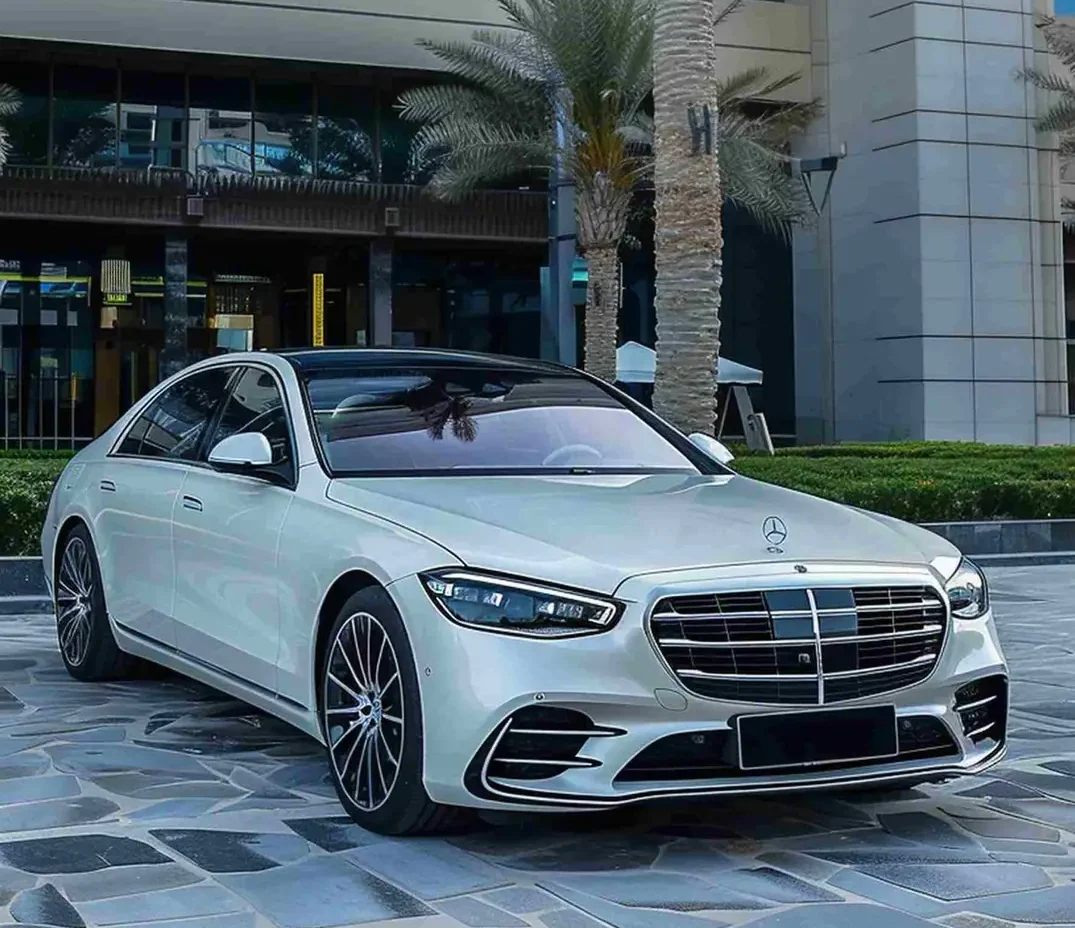
In the 1960s and 1970s, Daimler-Benz experienced strong growth and maintained its wartime and upward trend despite the 1973 oil crisis. The company introduced new models and structures, and introduced premium vehicles like the Mercedes-S-Class across all segments. Daimler-Benz focused on internal growth rather than acquiring small-car competitors after selling Auto Union in 1965. The 190s model, “Baby Benz,” was developed under Werner Breitschwerdt. It broadened the company’s small-car range, with production moved to the Bremen plant due to limited space at the Stuttgart plant.
Integrated Technology Group (1894 – 1995)
In the late 1970s, Daimler-Benz faced challenges from environmental concerns, oil crises, and rising competition from Asia. Because of these crises, the company saw lower profits, especially in the commercial vehicles market. To reduce dependence on the automotive sector, CEO Edzard Reuter expanded into technology and services, acquiring MTU München, Dornier (1985), AEG (1985), and MBB (1989). On 29 June 1989, Mercedes-Benz AG was established within a new holding structure alongside AEG AG, Deutsche Aerospace (DASA). Daimler-Benz AG was listed on the NYSE in 1993, marking its global financial expansion.
World Corp Vision (1995 – 2000)
In 1995, Daimler-Benz, under CEO Jürgen E. Schrempp, reorganised to focus on automotive mobility, transportation, and services. They sold non-core units such as Fokker, Dornier, and AEG, while the company expanded its car range with models including the A-, B-, and M-Class, SLK, CLK, and the Smart city car. In commercial vehicles, Mercedes-Benz formed Evo Bus and acquired Setra, Thomas Built Buses, and Western Star/Orion. In 1999, Maybach luxury cars were revived, and motorsport successes boosted the brand. After the Chrysler merger, Daimler later sold its stakes in Chrysler, Mitsubishi, and Hyundai, and in 2007, renamed the company Daimler AG to clarify its brand identity.
Boom and Internationalisation (2010 – 2011)
Following the global financial crisis, Daimler AG achieved a strong recovery in 2010, recording double-digit growth across all divisions. Demand increased significantly, production plants operated at full capacity, and Mercedes-Benz Cars achieved one of its highest sales results in history, with exceptional growth in China. Because of a strategic partnership, the company strengthened its global position. A wide-ranging alliance with the Renault-Nissan Alliance focused on small vehicles and engine development, while a 50:50 joint venture with BYD supported electric-vehicle production in China. Daimler also expanded its stake in Kamaz to reinforce its presence in Russia.
Daimler Trucks and Vans also performed strongly, launching updated and award-winning models and expanding production in key growth markets. Overall, 2010 marked a successful turnaround year, leading into the company’s 125th anniversary in 2011 as the inventor of the automobile.
Key Milestone for the Future (2012 – 2015)
A wide range of commercial vehicles and new passenger vehicles featuring advanced driver assistance systems and sustainable powertrains were introduced, marking important milestones for future growth and strengthening its position as the world’s most valuable premium automotive brand. Key events of this era were the world premiere of the new A-class and the production launch of the new S-Class at the Mercedes-Benz Sindelfingen plant. Launch of the Mercedes-V class.
Electric Mobility Gains Momentum (2016 – 2019)
The smallest model marks a milestone anniversary; a cutting-edge test centre officially begins operations; electric mobility gains strong momentum across all segments; and the company undertakes a strategic restructuring to strengthen its future direction. Mercedes introduced the new E-class; the company invests in battery production. In 2017, the S-Class was launched with a 48-volt system and a new six-cylinder engine with an Integrated Starter-Generator and an electric compressor to improve efficiency and performance. In 2029, Mercedes launched the EQV, the world’s first premium-segment, purely battery-electric MPV.
Of Strategy and Pandemic (2020)
In 2020, the COVID-19 pandemic impacted all divisions of Daimler AG. Despite global restrictions and economic challenges, the company continued to advance its sustainable business strategy. New models were launched, and production of next-generation vehicles began in Sindelfingen. Daimler Trucks introduced a fuel-cell concept truck and worked on its commitment to zero-emission transport. At the same time, Mercedes-Benz set a clear course toward profitable growth in the luxury segment, reinforcing its strategic focus on high-end mobility.
Pure play Car and Van Buses (2021)
In 2021, the passenger car and commercial vehicle divisions were separated into two independent companies, following strong shareholder approval. Meanwhile, operations were still impacted by the pandemic and global semiconductor shortages. In 2021, the new EQA premiered in the world. Mercedes Berlin plant manufactures ultra-high-performance electric motors.
Transformation Continues (2022)
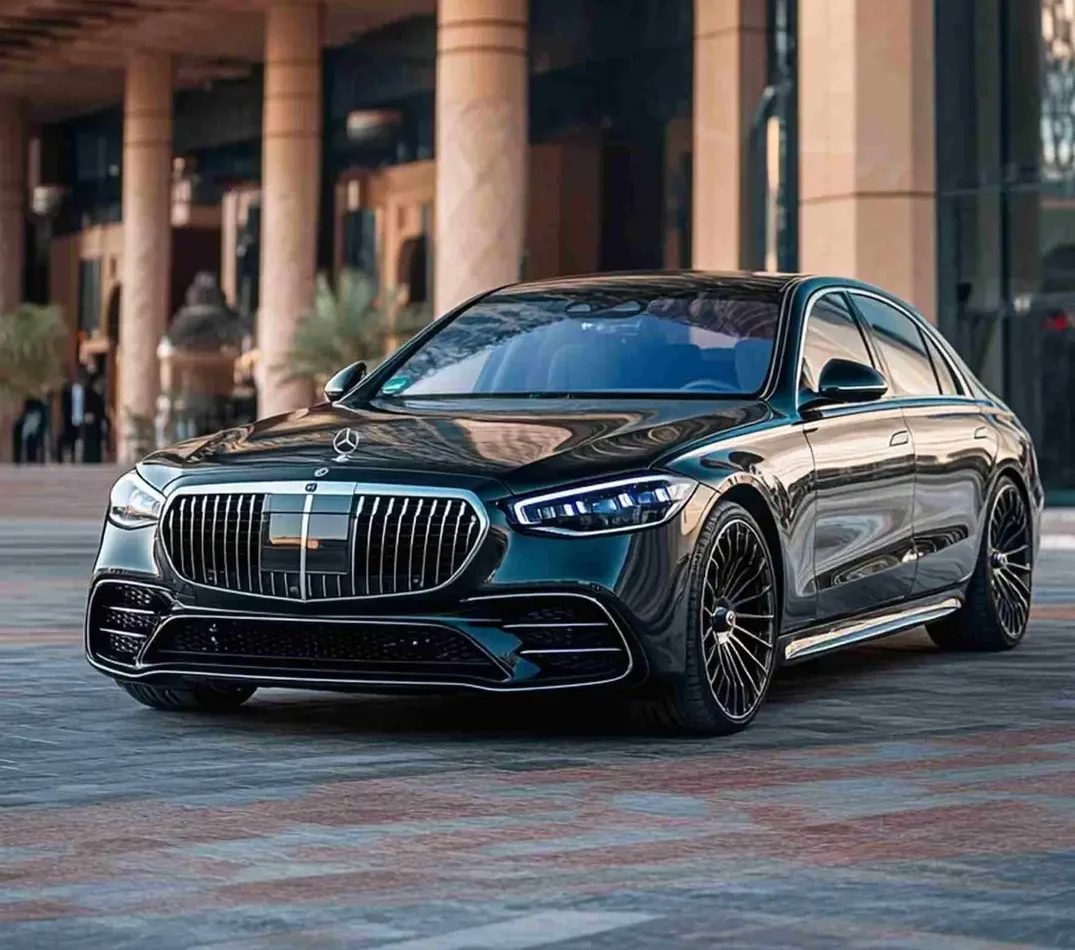
Despite challenges from the pandemic, semiconductor shortages, and the Ukraine war, the Mercedes-Benz Group continued its transformation. In its first year after the truck division, the company achieved strong profits, expanded electric production, formed key partnerships, and launched new models.
Artificial Intelligence and a Sustainable Business Strategy (2023)
Mercedes-Benz is accelerating its development, advancing its sustainable strategy and focusing on premium cars and vans. New models like the Mercedes-E-Class, CLE Coupé, and eSprinter have been launched, while the Concept CLA previews future platforms. Fast-charging parks in the USA, China, and Germany support EV growth. Digitalisation and AI are shaping work, and advanced crash tests demonstrate the high safety standards of Mercedes-Benz electric vehicles.
Technological Progress (2024)
Mercedes-Benz is strengthening its sustainable strategy and integrating it into daily operations. With the eCampus in Stuttgart-Untertürkheim and the battery recycling plant in Kuppenheim, the company is advancing battery technology and automated driving. Amid economic and geopolitical challenges, Mercedes-Benz also maintains a clear commitment to social responsibility. The world premiere of the electric G-Class also took place.
Largest Product Offensive in the Company’s History (2025)
Mercedes-Benz will launch over 40 new models in the next three years, marking its biggest product launch offensive. Four models were introduced in 2025. In the new CLA model, the company features the proprietary Mercedes-Benz operating system (MB.OS). In the future, all-electric VLE vans and the record-breaking AMG GT XX concept will offer initial glimpses of future innovations. Although the EU and the USA agreed on a single tariff rate for goods, the timing remains uncertain due to global political issues, trade tensions, and economic instability.
Conclusion
From the invention of the first automobile by Carl Benz and Gottlieb Daimler to today’s era of electric mobility, digitalisation, and artificial intelligence, Mercedes-Benz has continuously shaped the automotive industry. Over more than a century, the company has overcome wars, economic crises, global competition, and technological disruption while maintaining its commitment to innovation, quality, and performance.
Through strategic restructuring, global expansion, and strong investment in sustainable technologies, Mercedes-Benz has reinforced its position as a leading premium automotive brand. With its focus on electrification, advanced software systems, and future-ready platforms, the company continues to define the next chapter of mobility while building on its rich heritage as the inventor of the automobile.
